AI Leadership ·
Nobody wants to live in the AI future we’re describing
Fear is a lousy change strategy. The second chapter in Mark Cameron’s thinking on AI leadership: why the hopeful story is hard to tell, and why it works.
By Mark Cameron
8 min read
Two places to live

The future we’re describing

A future people want to live in
A few weeks ago I wrote The Return on Courage, about the leadership vacuum AI has exposed and the young people in Toronto who had been told the future was being designed somewhere else. Since then I’ve kept coming back to a question it left open: if a hopeful story about AI is so obviously what’s missing, why is it so hard to tell? This piece is my attempt at an answer, and it won’t be the last. I’m building this thinking out loud, one article at a time, so read these as chapters, each picking up where the last one stopped.
Here’s where I’ve landed so far. We’ve described a future that sounds like a dystopian inevitability, then acted surprised when people push back or quietly check out. Honestly, I’d be more worried if they were queuing up for it. And the reasons we keep telling the story this way are older, and far more human, than AI.
Our brains are lousy futurists
Some of this is wiring. Psychologists call it the negativity bias, and Roy Baumeister’s much-cited 2001 review, Bad Is Stronger Than Good, found that negative events, feedback and information outweigh positive ones in almost every area of life his team examined. When things are changing fast, the brain goes hunting for sabre-tooth tigers, and listing everything that could go wrong feels like taking control.
It isn’t. A risk register is a beautifully formatted list of things to lie awake about, and it steers nothing on its own. Worse, a group that stares at one bad outcome for long enough tends to start organising itself around it. The fear becomes a plan nobody meant to write.
The burning platform has a design flaw
Anyone who has led a real change programme knows this one. The burning platform works, briefly: tell people the business will collapse unless they move, and they will move, for a while. It’s a great way to get people off the platform and a terrible way to tell them where to swim. Fear grabs attention and gives no direction, so people scatter or dig in. Every change I’ve seen actually stick had something else at its centre: a picture of where we were heading that people wanted to reach, a reason it mattered, and a part in it for everyone in the room.

Burning platform: gets people off. Tells them nowhere to swim.

Shared picture: gives people somewhere to swim to.
We are now running the burning platform on an entire society. The public story of AI is almost wholly a story of loss: jobs, truth, attention, the sense that we’re still the ones deciding. The data tracks it. When the University of Melbourne and KPMG surveyed more than 48,000 people across 47 countries in 2025, worry about AI had climbed as use climbed, from 49 per cent to 62 per cent in the countries surveyed in both 2022 and 2025. People in emerging economies, who report getting more benefit from AI, were markedly more trusting of it than people in advanced economies like ours. People trust what they can see helping them. Funny that.
None of this is an argument for less vigilance. The risks are real, and a good part of my working life goes into helping boards put proper governance around them. But governance tells you what must not happen. It has almost nothing to say about what should, and no society has ever organised itself around a list of prohibitions. Neither has any company I’ve worked with, though a few have given it a red-hot go.
Who gets to tell the hopeful story
Most of the optimistic stories in circulation come from people building or selling the technology, which is exactly why so few people believe them. I’m aware of the irony of an AI adviser asking you to look on the bright side, so discount me accordingly. The story that’s missing has to come from leaders with nothing to ship: principals and vice-chancellors, chief executives, mayors and ministers. People whose credibility rests on the people they lead.
And here’s the uncomfortable bit for leaders in my world. The dystopian narrative didn’t come from nowhere. A lot of it was written in boardrooms, every time AI arrived in an organisation as a headcount line. You can’t talk your way out of a story your own decisions keep confirming.
A generation of doing last year cheaper
In The Return on Courage I argued that financial management has quietly stood in for leadership. That pattern has a backstory, and it’s an understandable one. Since the global financial crisis, leaders have steered through one shock after another: the crisis itself, a pandemic, wars in Europe and the Middle East, inflation and the rate rises that chased it. A world that felt stable started to feel like it could shift under you in a quarter. Boards rewarded the leaders who stabilised and optimised, and a generation of executives became extraordinarily good at doing last year slightly cheaper. Point that mindset at AI and of course you get a headcount line. All that optimisation also coincided with the slowest productivity growth in 60 years, by the Productivity Commission’s count of the decade between the GFC and COVID.
That lens did its job. It’s the wrong one for this moment. We now have an extraordinarily capable technology arriving alongside problems continuous improvement will never touch, from an ageing population to a housing shortage, and those problems need leaders willing to back a picture of the future and steer towards it.
The electric motor problem
Economic history is unusually clear on what happens next. Factories started installing electric motors in the 1880s, and for decades productivity barely moved, because owners put the new motor exactly where the steam engine had been and kept the old layout. The early electrified factory was the 1890s version of buying a frontier AI model to tidy up the meeting minutes. Stanford economist Paul David showed in 1990 that the payoff only arrived in the 1920s, when a new generation of managers redesigned factories around what electricity made possible; his later work with Gavin Wright put US manufacturing productivity growth at around 1.5 per cent a year before the First World War and about 5 per cent through the 1920s.
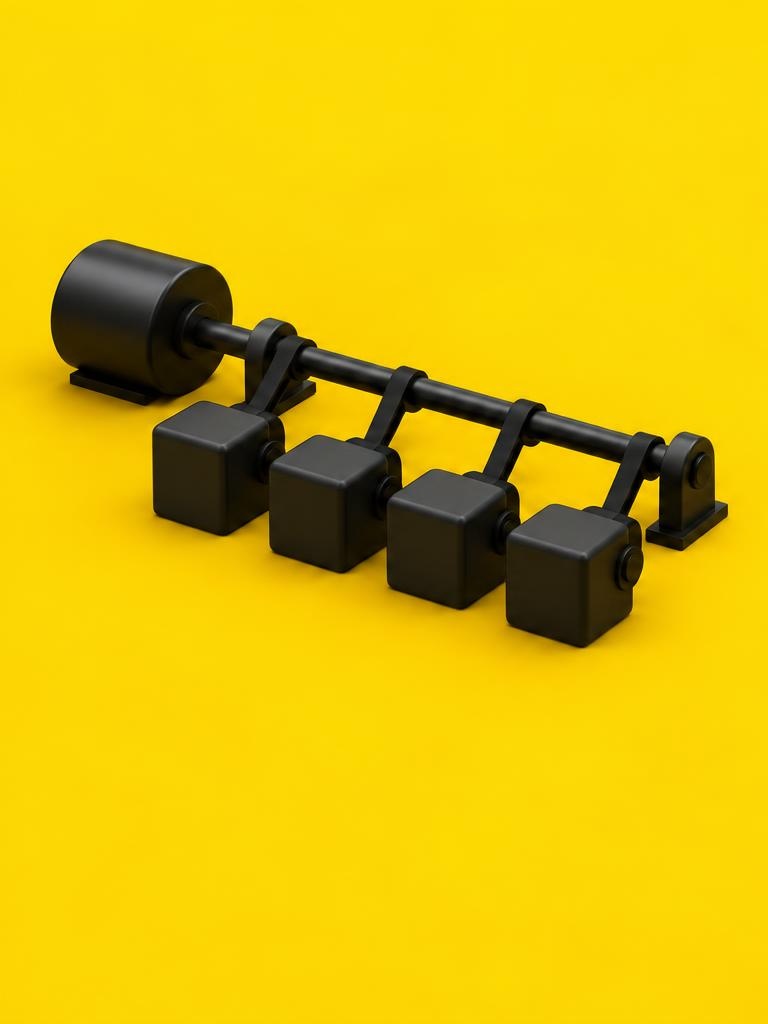
Old layout, new motor (the 1890s, and most AI today)

Redesigned around the motor (the 1920s, and the opportunity now)
Erik Brynjolfsson and his colleagues found the same shape with computers and called it the productivity J-curve: a dip while organisations invest in skills, process and new ways of working, then a climb.
Carlota Perez, who has mapped every technological revolution since 1771, adds the part that matters most here. Whether the back half of a revolution becomes a golden age depends on the social and institutional choices made at the turning point, and she reckons we’ve been stuck at that turning point since 2008. The technology will keep evolving regardless. What settles is the pattern of how we use it, and leaders get to set that pattern.
The same arc is available to us with AI, if we use it for more than cost-cutting. I’ve watched leaders use it to ask them better questions instead of handing them answers, and walk out sharper thinkers. I build tools in an afternoon that would once have needed a development team, a budget and a great deal of patience, then hand them to audiences to pull apart. Used that way, the technology builds critical thought and creativity. Used purely to remove people, it does the opposite, and every sceptic who told us AI was coming for them will have been right.
Confidence is a receipt
Backing a picture of the future is harder than it sounds. Growth is hard, new things fail more often than familiar ones, and in most corporate careers a visible failure costs far more than a quiet success earns. Nobody ever got fired for trimming costs. But when the economy, the geopolitics, the climate and the technology are all moving at once, standing still is also a bet, and probably the worst-priced one on the table.
Part of what keeps leaders frozen is that we get confidence the wrong way round. We wait to feel sure before we act, and in conditions like these, sure never turns up. Samuelson and Zeckhauser showed back in 1988 that people disproportionately stick with whatever is framed as the current option, even when switching costs almost nothing. The research on confidence runs the other way. Albert Bandura found that mastery experiences, actually attempting something and pulling it off, are the most powerful source of belief in our own capability, and INSEAD’s Herminia Ibarra argues that in times of transition leaders act their way into new thinking far more reliably than they think their way into new action. Confidence is the receipt you get for acting, not the ticket you need to start. Waiting for perfect information is also a decision, one that never has to go in a board paper.

Act
Evidence
Confidence
Act bigger
Wait for certainty
Confidence is the receipt you get for acting, not the ticket you need to start.
None of that happens without a picture people want to be part of. Nobody volunteers for experiments that feel like rehearsals for their own redundancy. It’s the oldest lesson in change management, and it holds whether you lead a team of twelve or a country: people commit to the change they can see themselves in. We’re living through a change programme the size of a society, and so far we’ve run it like a cost-reduction exercise.
The future is a stack of decisions
Last month I argued that the future is a decision. The more accurate version is that it’s thousands of them, and none of them arrive from somewhere else. It’s the sum of decisions being made right now: individuals deciding whether to learn this technology or hide from it, organisations deciding what to point it at, governments deciding what to allow and what to build. Decisions made from fear tend to be defensive and narrow, and added together they produce a future nobody would have designed. Decisions made towards a shared picture tend to line up, because people can see what they’re building and why. I don’t know exactly what that picture looks like, and it shouldn’t be any one person’s to paint. But leaders are the ones who have to pick up the brush.
How decisions add up

Decisions made from fear

Individuals
Organisations
Governments
The future we get
Decisions made towards a shared picture
So here’s the question I’d put to anyone running an organisation. If your people knew your AI strategy only from what you’ve done with it this year, what future would they think you were building? Every decision about AI is a small vote for one future or another. Make sure yours are votes for a future you’d actually want to live in.
Further reading
- • Baumeister, R. F., Bratslavsky, E., Finkenauer, C. and Vohs, K. D. (2001). Bad is stronger than good. Review of General Psychology, 5(4).
- • Samuelson, W. and Zeckhauser, R. (1988). Status quo bias in decision making. Journal of Risk and Uncertainty, 1(1), 7 to 59.
- • Bandura, A. (1997). Self-efficacy: The exercise of control. W. H. Freeman.
- • Ibarra, H. (2015). Act Like a Leader, Think Like a Leader. Harvard Business Review Press.
- • David, P. A. (1990). The dynamo and the computer: An historical perspective on the modern productivity paradox. American Economic Review Papers and Proceedings.
- • Brynjolfsson, E., Rock, D. and Syverson, C. (2021). The productivity J-curve: How intangibles complement general purpose technologies. American Economic Journal: Macroeconomics, 13(1), 333 to 372.
- • Perez, C. (2002). Technological Revolutions and Financial Capital: The Dynamics of Bubbles and Golden Ages. Edward Elgar.
- • Gillespie, N., Lockey, S. et al. (2025). Trust, attitudes and use of artificial intelligence: A global study 2025. The University of Melbourne and KPMG.
- • Productivity Commission (2023). 5-year Productivity Inquiry: Advancing Prosperity.
Related
- Previously in this thread: The Return on Courage
- The mess is the point